(Correspondents: Cheng Peng and Yu Yidi)
To promote high-level international academic exchange, broaden the global academic perspectives of faculty members and students, and support the high-quality development of management disciplines, the Office of International Exchange and Cooperation and the School of Management invited Professor Jennifer Shang of the University of Pittsburgh to Wuhan Institute of Technology from July 2 to 6 for a series of academic lectures under Hubei Province’s “World-Renowned Scientists Lecture Program in Hubei.”
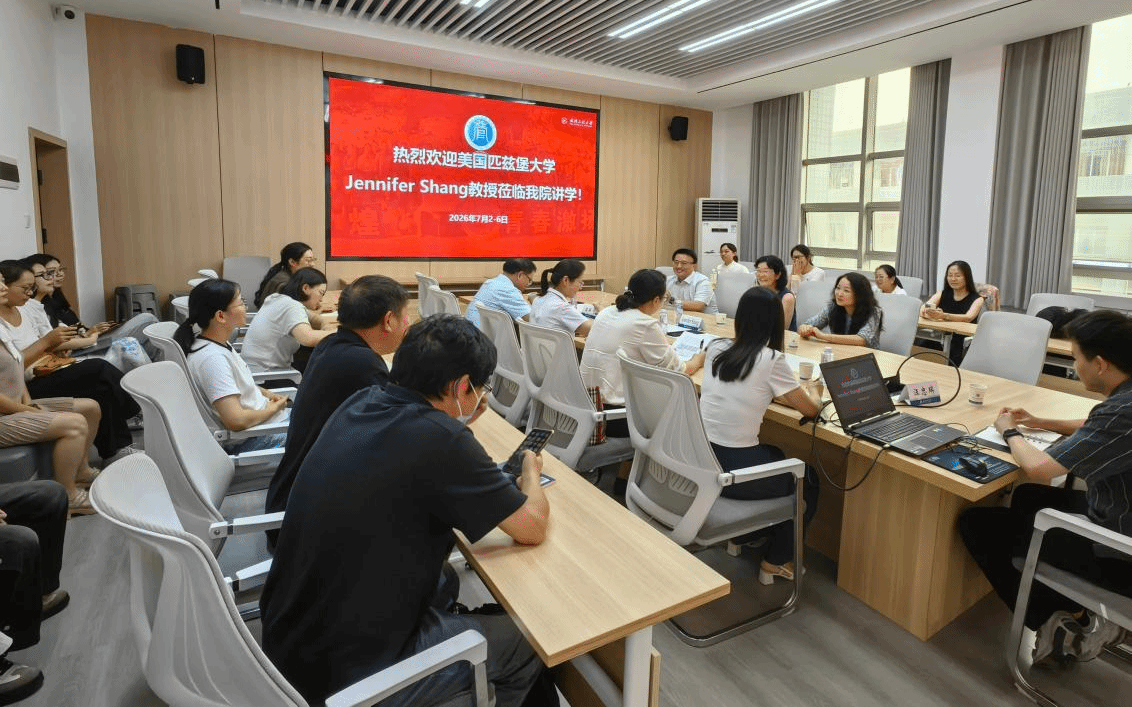
The activities were chaired by Xiong Chan, Vice Dean of the School of Management, and attended by faculty members and students of the School.
Professor Shang serves as Director of Business Analytics and Operations at the University of Pittsburgh’s Joseph M. Katz Graduate School of Business. She is an internationally renowned expert in operations management and marketing.
Over the course of her academic career, she has focused on five principal research areas: supply chain and service system optimization, pricing and revenue management, business data analytics, healthcare management, and multi-criteria decision-making. She has published more than 100 high-quality academic papers, including numerous articles in leading international business journals such as Management Science, Marketing Science, and the Journal of Marketing. Her research has made important theoretical contributions to the global development of operations management.
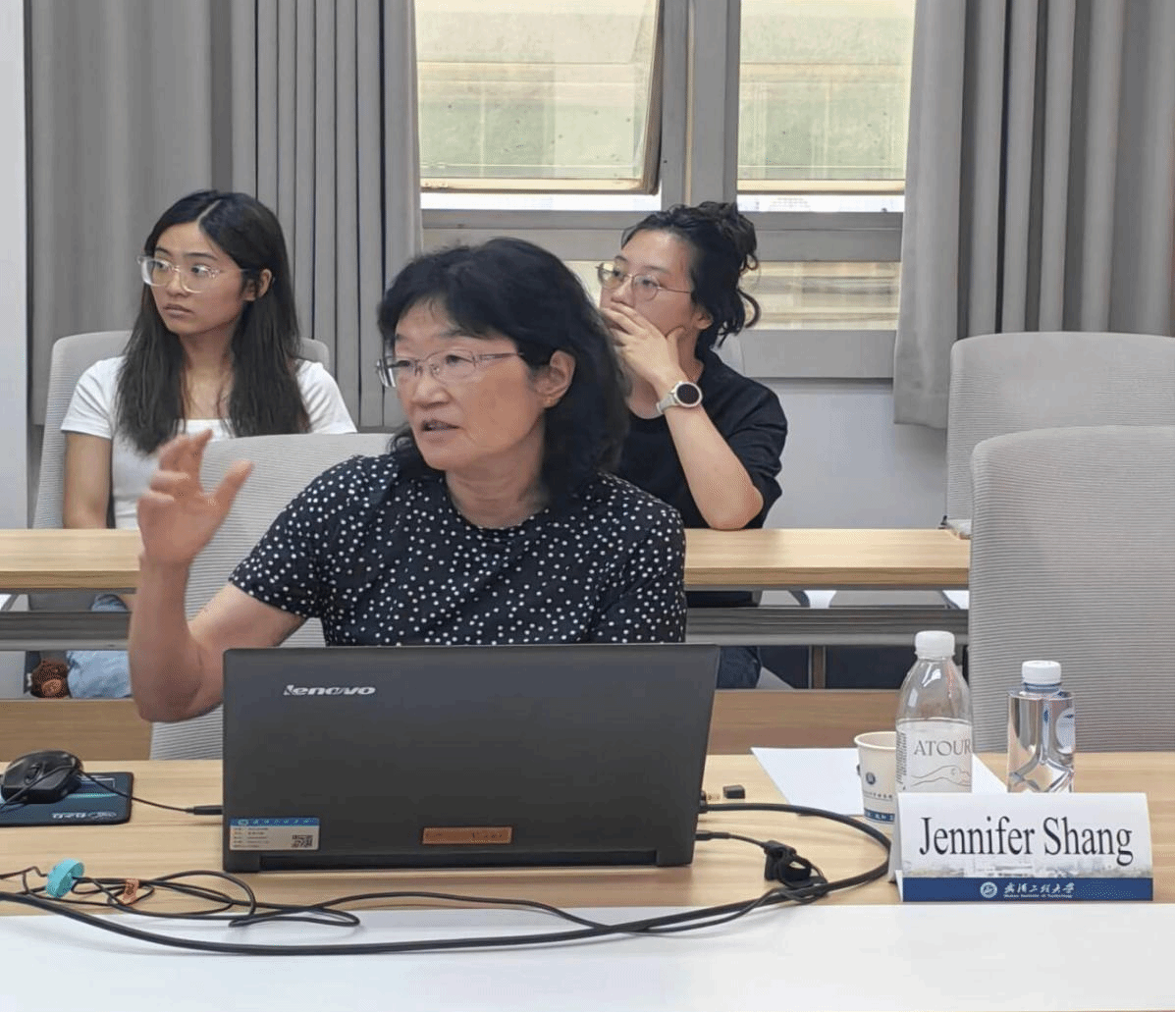
On July 2, Professor Shang delivered a lecture entitled “Future-Oriented Transformation and Development of Management Disciplines.” Focusing on the challenges confronting the transformation of management disciplines in the new era, she analyzed future trends in business education amid the rise of artificial intelligence and offered practical recommendations for conducting research and teaching under evolving circumstances.
During the discussion session, Professor Shang shared experiences from her own career and offered insights into submitting articles to leading academic journals. She answered questions from faculty members and students and advised young faculty members to achieve an appropriate balance between their personal lives and research. Drawing on the research experiences of international students she had supervised, she encouraged participants to have the courage to challenge themselves and maintain confidence in their abilities.
Professor Guo Haixiang, Vice Dean of the School of Economics and Management at China University of Geosciences, who accompanied Professor Shang during the visit, shared experience in preparing applications for national research projects and writing policy advisory reports. Li Jinling of Hubei University of Education discussed her experiences in visiting-study programs and academic research.
The lively interaction gave participating faculty members and students deeper insights into both disciplinary development and their own professional and academic growth.
On July 3, Professor Shang delivered her second lecture, entitled “Beyond Prediction: Transforming Chronic Disease Care Through AI and Personalization.” The lecture presented representative findings from her extensive research in healthcare operations and integrated perspectives from healthcare management, operations engineering, and artificial intelligence.
Professor Shang explained that the research addressed challenges in chronic disease diagnosis and treatment in the United States. It integrated three categories of healthcare data—algorithmic models, medical resources, and patient profiles—and employed AI to analyze multidimensional information on patients’ lifestyles, medical histories, medication use, and related feedback.
The research helped address pressures caused by competition for limited resources in chronic disease care and offered practical guidance for healthcare management in the United States.
On July 6, Professor Shang delivered her third lecture, entitled “Supply Chain Distribution System Improvement for Competitiveness,” focusing on distribution decision-making among pharmaceutical companies in the United States.
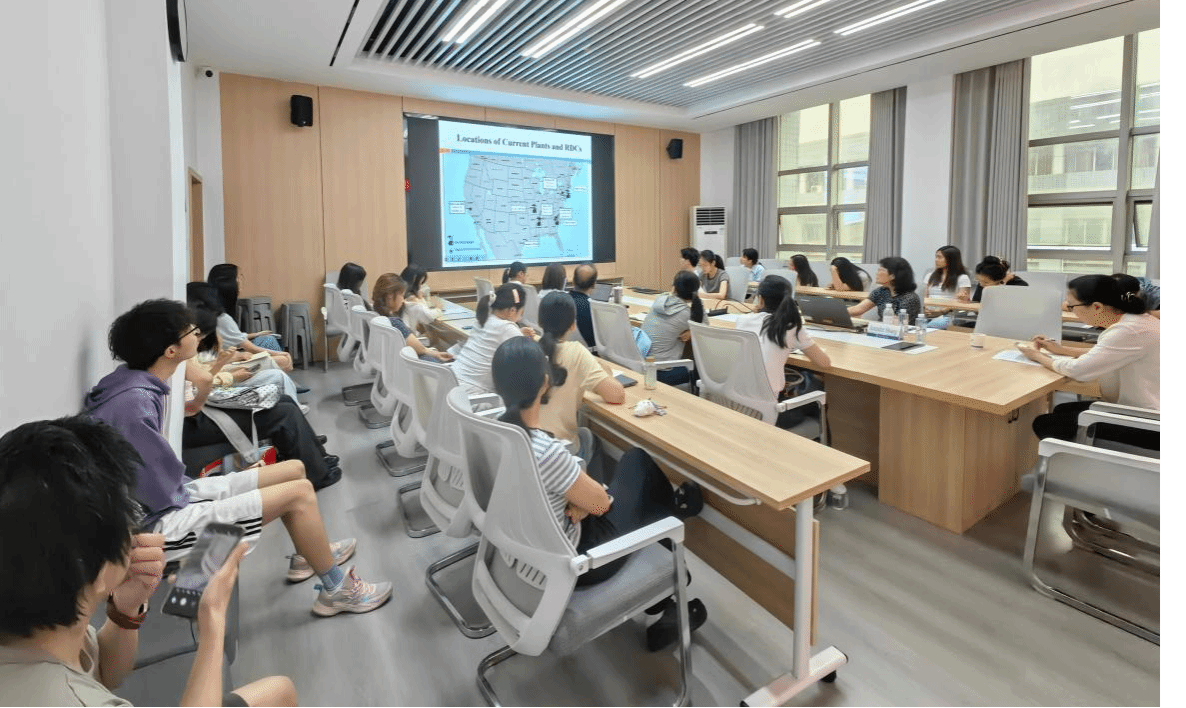
She explained that both the research questions and the data originated from a university–enterprise collaboration project. The project developed a logistics optimization framework integrating warehouse management, transportation capacity scheduling, and related functions. It established a modern distribution system characterized by low costs and strong resilience, effectively helping participating companies solve practical problems and offering valuable inspiration for the research of faculty members and students in attendance.
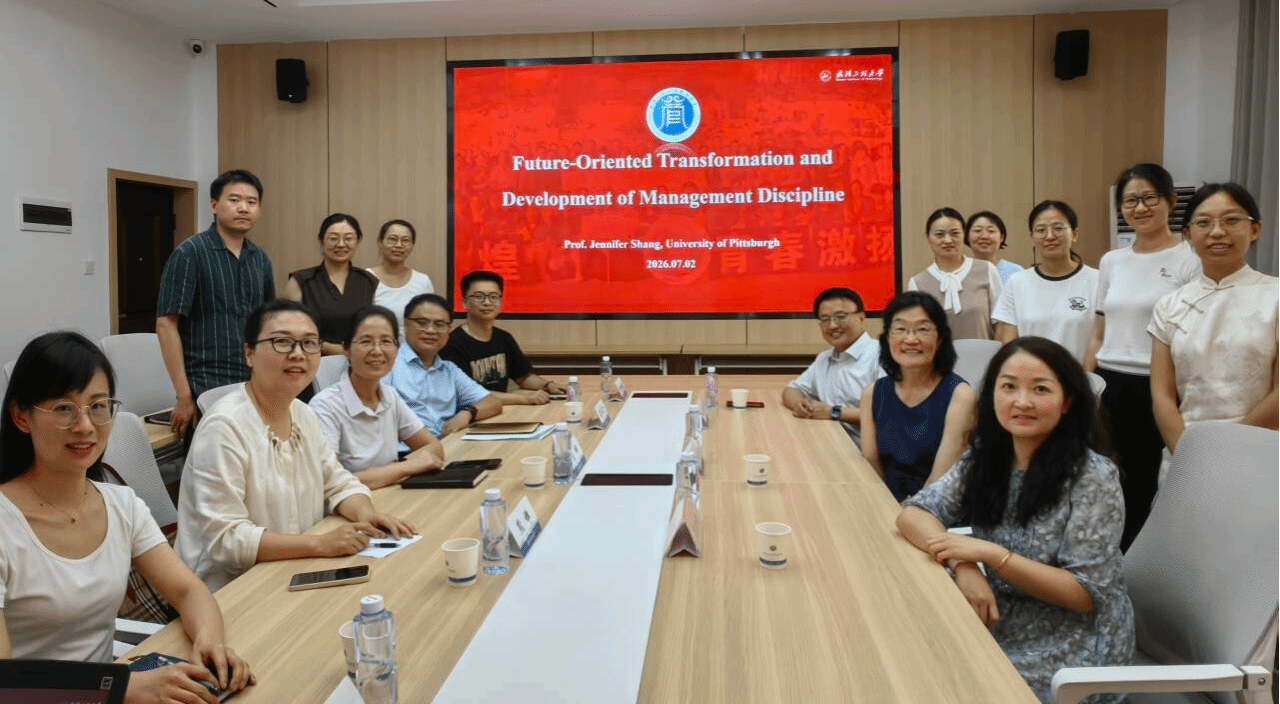
The lecture series represented an innovative implementation of Hubei Province’s “World-Renowned Scientists Lecture Program in Hubei” and an important step in the School of Management’s efforts to advance international cooperation.
Going forward, the School will continue to draw on the program’s resources to organize regular lectures and exchanges with leading scholars from China and abroad. It will deepen international academic collaboration, improve the quality and effectiveness of disciplinary development, and contribute to the School’s high-quality growth.
(Reviewed by Zuo Hui)